


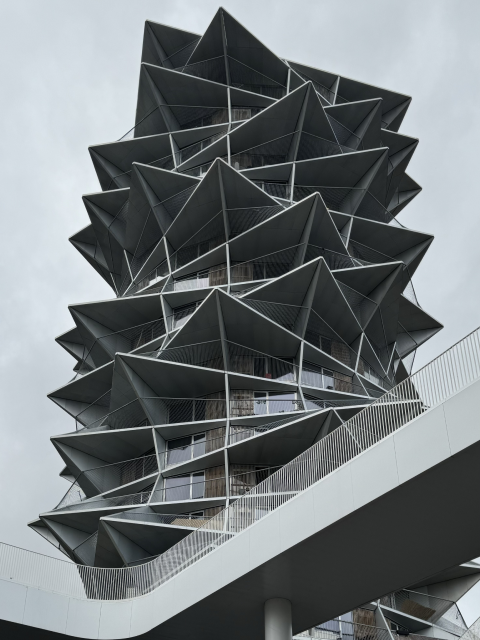
Where to Find Inspiration as a Visualizer — And What Copenhagen Has to Do with It
Working with architecture, interior design, and 3D visualization, we’re constantly confronted with the same question: where do you find inspiration? How do you infuse your projects not just with technical precision, but with feeling? How do you render not just walls, but atmosphere?
The common advice is simple: study great projects, browse colleagues’ portfolios, scroll through Behance, ArchDaily, Pinterest. Yes, it matters. But we believe — it’s not enough. Especially if you want to grow not just technically, but emotionally.
One of the most powerful sources of inspiration is travel. A change of city, pace, language, and perspective. Because in new places, we begin to see form, scale, light, and material differently.
You walk down the street and suddenly notice how the sunlight grazes the texture of a facade. Or how the color of one wall reflects in the windows of the opposite building. Or how concrete “sounds” different under your feet. This experience can’t be imagined at your desk — they have to be seen, lived, remembered. And later it would be brought into your render, your visualization, your project.
Our Copenhagen — How It Was
Our latest "reset point" as a team was Copenhagen.
This city turned out to be a true discovery — for both architects and visualizers. There’s no “shock-value” architecture here, nothing trying to outdo what’s next door. And that’s exactly its strength. This is a place where you begin to feel architecture — not as form, but as a relationship to space, to people, to light.
Now we’ll hand the mic to our teammate Kseniya, who shares her impressions firsthand:
Copenhagen — A City Where Everything’s in Its Place
A few days in Copenhagen felt like hitting pause.
We spent several days there, and the whole time it felt like the city breathed in its own rhythm — calm, steady, with deep respect for time.
We rode bikes, ate cinnamon buns (kanelsnegl), explored every museum we could find, sat by the water, and simply watched how everything functioned effortlessly. The city lives like it’s tuned to the right frequency.
Copenhagen is about a sense of order — without tension.
- The architecture doesn’t try to impress, it just belongs.
- You see brick, wood, glass — and it all exists naturally, without shouting “design.”
- And in that quietness lies great strength.
The Design Museum was another reminder that simplicity is not about lack — it’s about care.
- Objects don’t scream concepts — they quietly serve.
- Furniture, lighting, textiles — everything is threaded together by attentiveness to the human experience.
At the Architecture Center, you feel that the city is not a finished product, but a process.
- Copenhagen isn’t built in bursts — it grows organically, step by step, as if it knows where it’s going.
- There are models, diagrams, and stories about balance — between old and new, between function and environment.
- And you realize: architecture here isn’t just form — it’s a system of relationships.
After the museums, we walked through new districts like Nordhavn, Ørestad, and Islands Brygge.
These areas feel more modern, minimal, and tech-forward — yet still preserve a human scale.
- The buildings are simple, almost graphic.
- Concrete, metal, glass — but put together with surprising tact.
- Each structure seems to know exactly how much attention it needs, and not an inch more.
In Nordhavn especially, you feel this new kind of quiet urbanism — honest architecture, balconies reaching the water, space between facades, public areas made not for photos, but for being.
Even the large forms don’t overwhelm — because they hold rhythm and light.
The Strongest Impression: Louisiana Museum
Located just outside the city, the Louisiana Museum left the biggest impression.
The building feels completely absorbed into the landscape — light, glass, horizon, sea.
You walk through the galleries, and at some point, you stop separating where the building ends and nature begins. Or where you begin, for that matter.
Every window is a painting. Every reflection — a breath.
It’s exactly what we often try to capture in visualization — the moment when space becomes emotion.
And Then There Was Tisvildeleje
We also visited Tisvildeleje — a small coastal town with bright cottages, sea breeze, and a sauna with a view of the endless ocean.
It’s all very simple there: sand, wood, salt, silence.
And in that simplicity — pure joy of presence.
That’s the Essence of Copenhagen
It doesn’t demand your admiration. It doesn’t compete or insist.
It just exists — in balance. Between city and human, architecture and time.
And after being there, you don’t want to design louder. You want to design quieter.
Copenhagen and its surroundings don’t teach you form — they teach you attitude.
To light. To materials. To human scale.
It’s a city where concrete feels warm and minimalism feels alive.
Where design doesn’t show off — it simply makes life a little more peaceful.
Copenhagen doesn’t need to impress you — it just makes you more attentive.
Seeing With the Eyes, Not Just Rendering
Trips like these change how you approach interior visualization, architectural rendering, material selection, and lighting design.
You stop inventing the atmosphere — you begin to recall it.
That’s why we always recommend:
- Don’t look for inspiration only online.
- Go outside, ride a bike, travel to a new city.
- Notice how shadows behave on facades, how glass reflects trees, how silence resonates in architecture.
Lived impressions are what make your visualization not just technically strong — but alive. Because it will carry not only form — but life.
And if you’re looking for thoughtful, atmospheric visualizations from a team that’s genuinely inspired — email us at info@room.studio or just click the button on our website to submit a request.
We’ll be happy to discuss your project and help it speak the language of visuals.
